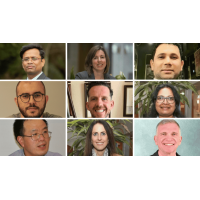


Nine researchers from South East Technological University (SETU) have been named in the 2026 World’s Top 2% Scientists list, marking the University's highest representation to date and highlighting the growing international impact of research taking place across SETU. SETU announced five researchers in the 2025 edition and four in 2024.
The researchers recognised this year work across a wide range of disciplines, including eye health, advanced manufacturing, sustainable agriculture, public health and renewable energy. Their research includes studies on how nutrition can support eye health, alternatives to antibiotics in farming, and technologies that generate electricity from ocean waves.
“Nine of our colleagues have earned international recognition for work they have built up over many years. That is a proud moment for SETU,” said Professor Veronica Campbell, President of SETU. “I congratulate each of the researchers named and acknowledge the teams and collaborators who have helped make their work possible.”
The researchers appear in the single-year list published by TOPSCINET, which draws on Scopus citation data released through the Elsevier Data Repository. The 2026 edition uses citations received during 2025. The list highlights researchers whose published work is widely cited by others in their field. It also includes citations to work published earlier in their careers.
The SETU researchers named in the 2026 list are Dr Raja Das, Professor Gillian Gardiner, Dr Nima E. Gorji, Dr Marcos Mariano, Professor John Nolan, Dr Sweta Rani, Dr Wanan Sheng, Professor Marie Claire Van Hout and Professor John Wells.
Among those named is the late Professor John Wells, who died in May 2026 while serving as SETU’s Head of Faculty of Health Sciences. A mental health nurse by training, he previously led the Department of Nursing and later the School of Health Science. Professor Campbell said it was “especially meaningful to see John’s name on this year’s list”, recalling his contribution to nursing education and research and the warmth with which colleagues remember him.
The 2026 single-year list is available through TOPSCINET, where readers can search by researcher or institution.