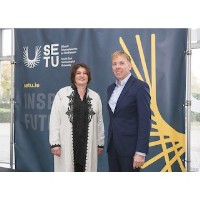


SETU expands access to Home Economics with new degree for the southeast
South East Technological University (SETU) has launched its Bachelor of Arts (B.A.) (Hons) in Home Economics. The programme is the first of its kind in the southeast region that gives students the opportunity to study home economics at degree level alongside an additional minor subject from arts and humanities.
This is a future-focused, dynamic degree that promotes healthier, more sustainable ways of living across homes, schools, and communities. On a practical level, the programme creates greater access for students of the southeast who aspire to teach home economics, or who wish to enter other related professions. On the significance of SETU’s offering, Dr Don O’Neill, Head of Department of Culinary Arts, Hospitality, and Tourism, said, “The launch of our bachelor’s degree in home economics in combination with a minor subject is the start of an exciting new chapter at SETU.”
“Previously, students would have to travel outside the region to complete home economics studies. This degree offers a strong foundation for progression to home economics teaching qualifications, or work in a very diverse range of areas such as nutrition, textile design, or community health,” says Dr O’Neill. “Furthermore, the ability for students to add an additional subject to their degree means SETU’s graduates become versatile and dynamic professionals in their future careers, with greater pathways open to them post-study,” he added.
SETU’s degree course allows students to study home economics as a major subject alongside one minor subject chosen from a selection of topics on the University’s Bachelor of Arts (Hons) degree. Students can choose from English, French, Spanish, Irish, Law, Religious Studies, or Geography Environment and Sustainability as a second subject. Programme Director, Dr Aileen Murphy, said, “At its core, the degree brings together food and nutrition, textiles, family and consumer studies, and sustainability. This integrated approach reflects modern life, and the daily decisions people make about food, health, clothing, resources, and wellbeing.”
“Our programme is delivered by a team of academic staff with strong groundings in the practical application of home economics principles.” “Our lecturers bring extensive professional experience and best practice in education creating a rich, hands-on learning environment where students develop practical skills through real-world application” Dr Murphy continued. “In addition, our state-of-the-art culinary and textile laboratories provide the optimum environment for students to put their learnings into practice. Students will also have the chance to engage with health initiatives, food producers, sustainability projects, and community organisations, ensuring their learning is grounded in real societal needs.”
With a strong emphasis on evidence-based practice, ethical awareness, and innovation, graduates are ready for diverse careers in education, health promotion, policy, social services, food and nutrition industries, and community development. Alongside these professional opportunities, the course has an international study option for students to spend a year abroad at a partner university. Having enhanced their skillset abroad, those students will graduate with a B.A. in Home Economics (Hons) International.